A Seasonal Home Maintenance Walk-Through
A practical route for spotting visible upkeep needs, choosing safe next actions, and knowing when to seek qualified help.
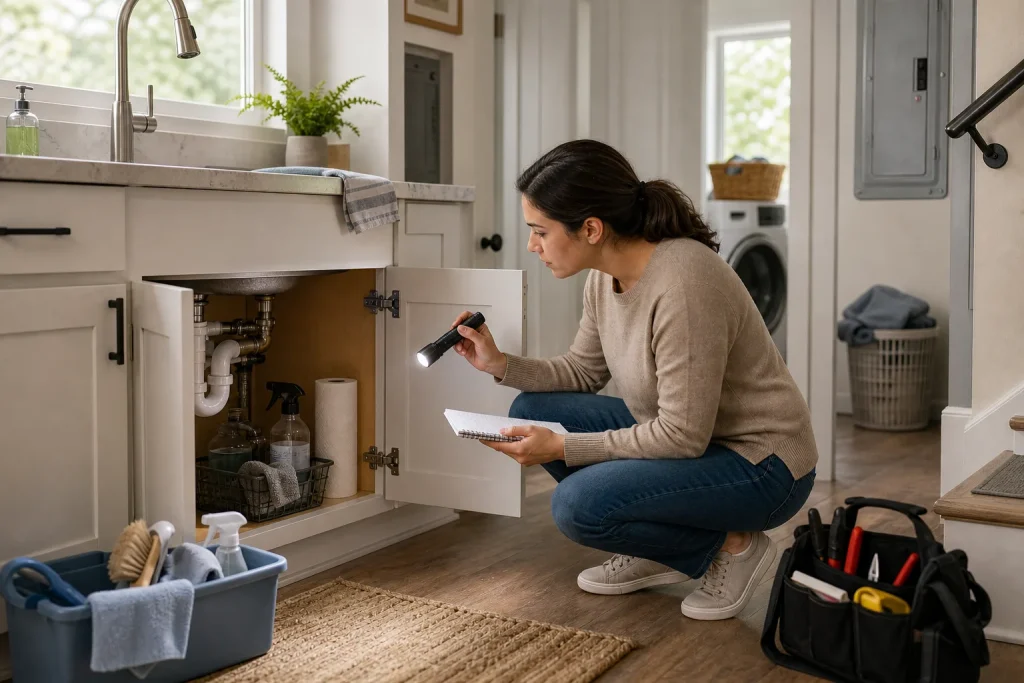
Home maintenance is easier to manage when it begins with what is visible and ends with a clear decision. A seasonal walk-through can help you notice a new stain, loose fitting, or blocked access before it disappears into the background of daily life. It is not a home inspection, a diagnosis, or an invitation to repair unfamiliar equipment. Treat it instead as a guided tour with a few boundaries: look without dismantling, do only routine care you understand, and bring in qualified help when a concern reaches beyond your skills.
Rather than making every visit a sweep of every room, give each walk-through a particular purpose. One pass might focus on water’s path through the kitchen and bathroom; another might focus on keeping routes to household equipment clear. A written record can connect those separate visits without turning upkeep into a large project. Use the observations to decide what can be cleaned, what needs watching, and what should be referred to a landlord or qualified professional.
Begin with the route, not the repair
Pick a route that lets you see familiar surfaces without climbing, shifting heavy objects, or opening equipment covers. Move through the home in an order that makes sense for its layout, including only accessible areas. Look for changes that can be described plainly: a new patch of peeling paint, a door that no longer closes smoothly, or an unfamiliar odor. Avoid probing a stain or trying to identify the cause of a smell. The useful result of this pass is a specific observation, not a theory about what lies behind a wall.
Make the route suit the conditions rather than treating the season as a rigid schedule. A period of wet weather may make visible dampness more relevant; a change in temperature may make drafts easier to notice. If a room is crowded, a surface is out of reach, or lighting is poor, mark that area as not checked. Do not force access just to complete a list. The limit itself is useful information: it tells you where a safe visual check ends and where another person’s help may be needed.
Keep everyday rooms safe and usable
In living and sleeping areas, notice changes around windows, doors, walls, floors, and accessible light fittings. A loose latch or a new mark can be recorded without taking anything apart. Look at cords and plugs only from the outside; do not handle damaged wiring or attempt a repair. Dust accessible fittings only as their care instructions allow, with power off when appropriate. If a fixture appears unsafe, or you see damaged wiring, stop using the affected item if that can be done without approaching a hazard, keep others away, and contact a qualified electrician or other appropriate professional.
Hallways and stairs deserve attention for a different reason: they need to remain clear and steady to use. Check whether a handrail seems loose, a floor covering shifts, or a bulb has failed. If the issue is an ordinary task you can confidently handle according to the product instructions, do so; if it involves a damaged fixture, uncertain wiring, or a repair requiring tools or access you do not have, leave it alone and seek help. A walk-through cannot certify that a system is safe. Its role is to identify a visible change and guide a sensible next move.
Follow visible signs of water in kitchens and bathrooms
Look at accessible areas beneath sinks and around taps, toilets, tubs, and visible appliance connections. A dry cabinet, a fresh drip, and a spreading stain call for different choices. Do not remove panels or attempt to trace a hidden leak. Wipe ordinary surface grime using products according to their labels, and never mix cleaning products. If water is actively escaping, avoid the affected area when necessary and contact the responsible property manager or a qualified plumbing professional promptly. For electrical concerns near water, keep clear and seek appropriate professional or urgent local safety advice.
In the kitchen, notice whether handles and cabinet doors remain secure and whether an accessible filter needs routine care under the appliance instructions. In the bathroom, look for recurring condensation and visible blockage at an accessible exhaust vent. If a removable part is designed for user cleaning, follow its instructions; if the cause of moisture is unclear or damage appears to spread, do not guess at plumbing, ventilation, or electrical repairs. For renters, report concerns through the property manager rather than making changes that may be outside your responsibility.
Give household equipment a clear boundary
In laundry and utility spaces, check for visible lint near the dryer opening, moisture around the washer, and clutter blocking access to shutoffs or service panels. Follow the equipment maker’s care instructions, and do not remove covers or reach into machinery. If an appliance is overheating, smoking, sparking, or making an unfamiliar noise, do not investigate or keep operating it. If there is smoke, fire, or immediate danger, move away and contact local emergency services. Otherwise, keep clear, stop use only if that is safe without approaching the hazard, and contact the manufacturer, a qualified technician, or an electrician as appropriate.
A breaker that trips repeatedly is not a cue to keep resetting it or to diagnose the circuit yourself. Leave the affected equipment off if you can do so safely, keep others away from anything that appears damaged, and get advice from a qualified electrician. Urgent conditions may require local emergency or utility guidance; this walk-through is not a substitute for that advice. In basements, attics, and storage areas, observe only what is safely accessible. Record visible water marks or unusual odors without trying to identify their source, and refer significant moisture, structural changes, or suspected hazardous materials to an appropriate professional.
Make each observation lead to a decision
Use a short note with the room, visible observation, action taken, and next decision. A helpful entry might say, “Utility room: damp mark beside washer; kept clear; report if still wet.” Avoid labels such as “bad pipe” when you do not know the cause. A photo may help compare a visible change, but keep it private if it shows personal details. Use the record to distinguish a routine task from a developing concern, not to create a diagnosis or delay asking for help.
- Observation: A cabinet surface is dry and the mark is unchanged. If there is no new moisture, then keep a brief watch note; otherwise report the change to the responsible person.
- Observation: A fresh drip is visible beneath a sink. If water is actively escaping, then keep clear and contact a property manager or qualified plumbing professional; otherwise record the visible condition and arrange appropriate advice.
- Observation: A floor covering shifts in a hallway. If it can be secured safely using its intended method, then address that ordinary task; otherwise keep the route clear and arrange help.
- Observation: A visible plug or cord is damaged. If you can avoid it without touching the damage, then keep others clear and seek qualified help; otherwise move away and follow urgent local safety guidance.
- Observation: An appliance is unusually hot or smoking. If there is smoke, fire, or immediate danger, then move away and contact emergency services; otherwise do not use or inspect it and contact a qualified professional.
- Observation: A recurring damp smell is present in a storage area. If the source is not plainly accessible and safe to address, then record the location and ask an appropriate professional; otherwise follow the relevant care instructions and check for a change later.
Work through a hypothetical maintenance decision
Consider an invented example: a renter begins with a dry cabinet under the kitchen sink and notices a faint water mark on its inside wall. The starting inputs are the visible mark, a dry surface, and no known source. First, the renter records the room, location, and date without calling the mark a leak. Next, the renter avoids tightening fittings or opening the wall. Then, during a later routine visit, the renter looks from the same safe position and compares the mark and surface. If both remain dry and unchanged, the result is a watch note, not a diagnosis. If a fresh drip or dampness appears, the renter records that change and promptly contacts the property manager. The tradeoff is clear: no speculative repair, but a specific report if the visible condition changes.
That same decision pattern can serve other observations, with the right person brought in sooner when there is immediate danger or specialist equipment involved. A tenant can report a concern rather than alter a fixture; an owner can contact a qualified professional when the work involves electrical systems, gas, structure, or an uncertain hazard. Keep the record concise enough to use: what was visible, what you did, and who needs to act next. If a note no longer leads to a decision, revise the route or remove that prompt rather than adding more paperwork.
A useful seasonal walk-through is not a test of how much you can fix. It is a way to notice changes, protect access to household equipment, and choose an appropriate next action without guessing. Let safe access and the instructions for each product set the limits of routine care. When a concern is urgent, equipment-specific, or outside your confidence, step back and seek qualified or local safety guidance. Clear observations make that handoff more useful while keeping ordinary upkeep manageable.