A Simple Guide to Layering Light at Home
Learn how ambient, task and accent lighting can support everyday activities, and how to make thoughtful lighting choices without crowding a room with fixtures.
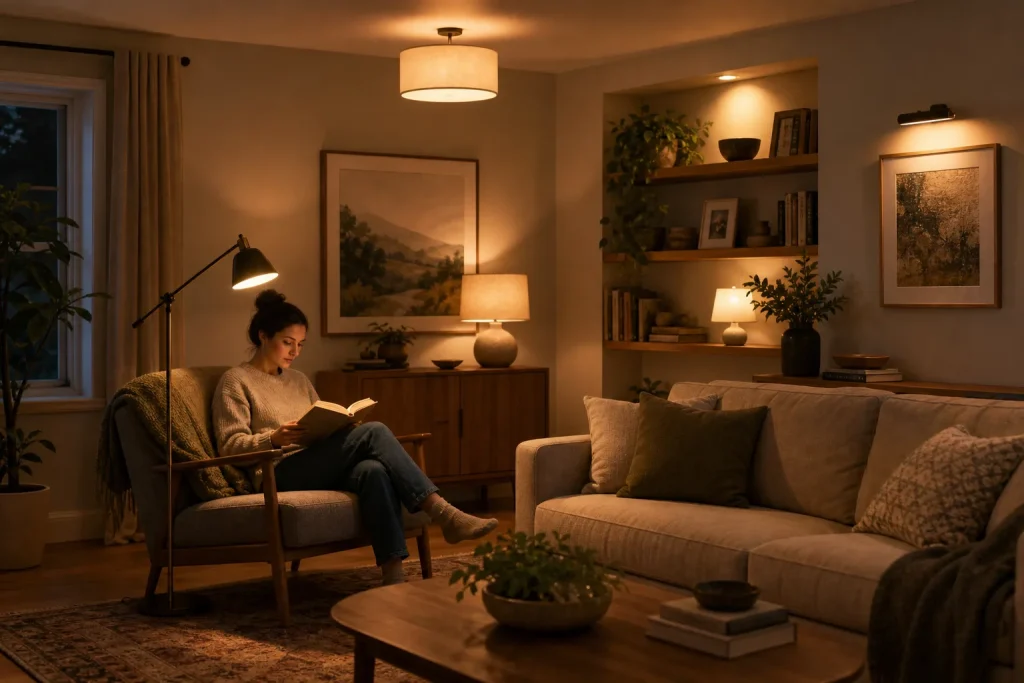
Lighting shapes how a room works: whether a person can read comfortably, find items on a counter or move through the space without relying on a single bright source. A useful arrangement often combines general illumination, light directed toward particular activities and softer illumination that draws attention to selected details. These functions are commonly called ambient, task and accent lighting. They describe what light does, rather than requiring three separate kinds of fixtures.
Instead of treating lighting as a shopping list, consider how the room’s existing sources interact with its furniture, surfaces and daily routines. A table lamp might help someone read while also providing a softer alternative to an overhead fixture. A light aimed at art may add emphasis, but could also reflect into a viewer’s eyes if its position is poorly chosen. Looking at these relationships helps keep the plan practical and the room visually settled.
Let the Room’s Character Shape the Plan
Rooms are not used in a uniform way, and their lighting need not follow a standard formula. A living room may shift between conversation, reading and quiet time, while a kitchen might be a place to prepare food, eat and pass through. Furniture and finishes influence the experience too: a dark corner, a reflective tabletop or a tall bookcase can affect how existing light is perceived. Consider the room as it is actually arranged, rather than planning from its center alone.
For instance, imagine a household that uses one end of a living room for reading and the other for conversation. A ceiling fixture can provide a general base, but it may not serve both areas equally. The reading position may call for a nearby lamp, while the conversation area may feel better with softer light spread around it. The point is not to add a fixture to every zone; it is to decide which moments feel unsupported and whether an existing source can be redirected or softened.
Make General Light Comfortable
Ambient light provides a room’s general visibility. It may come from a ceiling fixture, wall lights or lamps, alone or in combination. Its job is to make moving through the space feel straightforward, not to provide ideal illumination for every activity. A fixture mounted overhead can leave parts of a room feeling different from the area directly beneath it. Shade, direction, surface finishes and the viewer’s position all affect the result.
When general light feels uncomfortable, more brightness is not automatically the answer. An exposed bulb may be distracting from a seated position, while a shade that directs light downward can leave walls visually dark. Consider whether changing the shade, using a diffuser designed for the fixture or repositioning a lamp would make the light more comfortable. Any change should suit the fixture and follow its maker’s guidance. Check the effect from the places where people usually sit and stand, not just from the doorway.
Give Activity Light a Clear Job
Task lighting supports a specific activity, such as reading, writing or preparing food. Its useful position depends on the task and the person doing it. A reading lamp should make the page easier to see without directing light into the reader’s eyes. At a desk or counter, placing a source to one side may help prevent the worker’s body from casting a shadow over the area. Under-cabinet lighting can also help illuminate a counter that feels shaded from above.
Check task light from the position where the work actually happens. If someone sits at a desk, a lamp that looks well placed while standing may still shine directly into their view. If a counter is shadowed, moving a portable lamp or adjusting its shade may be preferable to buying a new fixture. Where a fixed installation is being considered, the available wiring and fixture requirements matter; consult a qualified professional when electrical work is beyond ordinary, safe adjustments. The aim is useful light without glare or awkward shadows.
Use Accent Light to Direct Attention
Accent lighting draws attention to a chosen feature, such as artwork, a plant or a textured surface. A small lamp can also add a softer pool of light that changes the feel of an evening room. The effect is most coherent when the source has a clear target. If several objects and surfaces are lit with equal emphasis, the eye may have no obvious place to rest, and the room can feel busier rather than more inviting.
Consider the material and viewing angle before aiming a light at a feature. Glass, framed art and polished surfaces may reflect a source toward a usual seat. If that happens, changing the angle or moving the source can reduce the distraction; if the reflection remains, the feature may be better left without dedicated accent light. A shaded lamp near a shelf might create a gentle pool, whereas a focused beam may better suit a particular display. Choose according to what the room needs, not an assumption that every feature should be highlighted.
Keep Sources Visually Compatible
Lighting roles can overlap, so it is useful to consider how sources look when used together. A floor lamp may provide some general illumination and support reading; a table lamp may work as both a soft background source and a decorative accent. The combination should feel comfortable from the room’s usual viewpoints. Differences in apparent color can be noticeable when sources are close together, but the effect depends on the lamps, their shades, surrounding finishes and viewing conditions.
Bulb and control compatibility is specific to the products involved. A dimmer should be used only with bulbs and fixtures identified as compatible by their manufacturers; otherwise, the light may flicker, behave unexpectedly or fail to dim properly. Before choosing bulbs, check the fixture’s requirements and the bulb packaging or product information. If a control is already installed and the combination behaves poorly, stop using the dimming function and seek guidance from the manufacturer or a qualified electrician. Compare the light sources in the room, since packaging alone cannot show how they will appear together.
Make Choices With a Worked Room Example
Here is a fully hypothetical case with illustrative details, not a measured result. Suppose a small living room has one ceiling fixture, a chair used for evening reading and framed art that is hard to notice after dark. The household wants comfortable reading and a visible feature but would rather avoid filling the floor with furniture. First, they identify the ceiling fixture as the general source and check whether its existing shade produces uncomfortable glare from the chair. They decide to keep it for general use, but use a more suitable shade only if the fixture maker permits that change.
Next, they place a shaded floor lamp beside the reading chair, then sit in the chair to check whether the page is lit without the bulb shining into their eyes. They adjust the lamp’s position until the light falls on the book, with the tradeoff that the lamp and its cord need a suitable place. Finally, they aim a small accent source toward the art and look from the usual seat. If reflected light is distracting, they redirect or omit that source; if the picture remains visible without glare, they keep the arrangement. The resulting decision is a modest set of sources, each with a distinct purpose, rather than an automatic purchase of extra fixtures.
- Check: Is the room difficult to move through with the general light on? If broad areas remain too dim, then adjust an existing source or consider an appropriate additional ambient source; otherwise, keep the current general layer.
- Check: Does an exposed bulb distract someone from a usual seat? If it does, then consider a compatible shade or diffuser; otherwise, avoid changing a comfortable fixture without a reason.
- Check: Is a book, counter or desk shadowed during its main activity? If it is, then reposition a task light or consider a suitable directed source; otherwise, do not add task lighting merely to fill space.
- Check: Does a task lamp shine into the user’s eyes or cast an awkward shadow? If it does, then change its angle or side; otherwise, leave its placement in place.
- Check: Does accent light create a reflection from the usual viewing position? If it does, then redirect the beam or remove the accent source; otherwise, retain it only if the feature benefits from the emphasis.
- Check: Do nearby sources appear noticeably different in color or mood? If they do, then compare product information and choose a compatible combination if appropriate; otherwise, keep the sources that already feel coherent.
- Check: Is a bulb, fixture and dimmer explicitly identified as a compatible combination? If yes, then follow their instructions; if not, use a suitable non-dimming control or seek manufacturer or electrician guidance instead of assuming they will work together.
Good lighting is less about filling a room with fixtures than giving each source a useful role. General light supports movement, task light serves an activity and accent light directs attention, with boundaries that can overlap. By considering how each source behaves from the places where people sit, work and walk, it becomes easier to make restrained choices. The final arrangement can be practical and comfortable while remaining specific to the room, its furnishings and the people who use it.